


1. Electronics Manufacturing Industry
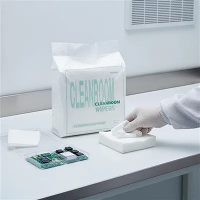
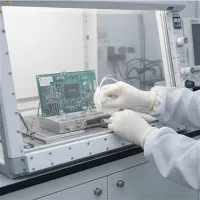
In semiconductor chip production workshops, handheld surface resistance testers are widely used to detect the surface resistance of chip production equipment. For example, on the production line, the surface of wafer transfer equipment needs to maintain specific electrostatic dissipation properties. By using the tester, the technical staff can regularly check whether the surface resistance of the equipment is within the safe range (generally, the surface resistance is required to be between 10^6 and 10^9 Ω). If an abnormal resistance value is detected, they can take timely measures such as cleaning the equipment surface and replacing anti-static components.
The detection of packaging materials for electronic components is also crucial. For example, the plastic trays used to package sensitive electronic elements like integrated circuits, the surface resistance of which can be measured by the tester to ensure that they have good electrostatic dissipation performance and can effectively protect the electronic elements from electrostatic discharge hazards during transportation and storage.
2. Automotive Manufacturing Industry
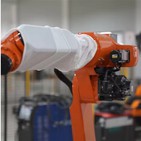
In the automotive painting workshops, electrostatic spraying technology is widely applied. Handheld surface resistance testers can be used to detect the surface resistance of the vehicle body surface to be painted. An appropriate surface resistance of the vehicle body helps the uniform adsorption of paint particles and improves the painting quality. For example, when the surface resistance of the vehicle body is within a certain range (such as 10^8 to 10^10 Ω), the electrostatic painting equipment can make the paint adhere better to the vehicle body, reducing the orange peel phenomenon and paint waste.
During the production of automotive interior parts, some plastic and fabric materials also need to be tested for surface resistance. For example, the fabric of the car seat, by testing its surface resistance with the tester, it can be ensured that it meets the anti-static standards to prevent passengers from feeling uncomfortable due to static electricity when getting in and out of the car, and also to reduce dust adsorption caused by static electricity.

3. Medical Equipment Industry
In operating rooms and medical clean rooms, environmental control is crucial for patient safety. Handheld surface resistance testers can be used to detect the surface resistance of the operating room floor, the surface of the operating table, and the outer shells of various medical equipment. For example, the operating room floor needs to maintain good electrostatic dissipation performance, and the surface resistance is usually required to be between 10^6 and 10^9 Ω to prevent electrostatic discharge from causing medical equipment failures or harm to patients.
For some electronic medical equipment, such as electrocardiogram machines and defibrillators, by testing the surface resistance of their outer shells with the tester, it can be ensured that they can effectively prevent electrostatic accumulation and guarantee the normal operation of the equipment and the safety of patients.
4. Chemical Industry
In chemical laboratories and production workshops, many chemical substances are very sensitive to static electricity. Handheld surface resistance testers can be used to detect the surface resistance of chemical reaction kettles, pipelines and other equipment. For example, during the production of flammable and explosive chemicals, the surface resistance of the reaction kettle must be kept within the safe range (such as 10^6 to 10^9 Ω) to prevent electrostatic discharge from causing fire or explosion accidents.
For the packaging materials of chemical products, such as plastic buckets and glass bottles, the tester can also be used to detect their surface resistance. Ensure that the packaging materials have appropriate electrostatic properties and can avoid the dangers caused by static electricity during the storage and transportation of products.
5. Aerospace Field
During the manufacturing and maintenance of aircraft, the surface resistance of the metal parts such as the wings and fuselage of the aircraft, as well as the electronic equipment and instruments in the cockpit need to be strictly detected. Handheld surface resistance testers can be used to check the conductivity and electrostatic dissipation ability of the aircraft part surfaces. For example, the surface resistance of the fuel system parts of the aircraft must meet strict standards (such as 10^6 to 10^9 Ω) to prevent electrostatic discharge from causing fuel ignition or explosion.
In the assembly workshops of aerospace electronic equipment, the tester is used to detect the surface resistance of electronic components and circuit boards on satellites, rockets and other equipment to ensure that they can work normally under extreme conditions such as the space environment without being affected by static electricity.