


In a high-standard cleanroom, the smallest oversight can lead to a significant spike in particle counts. While most facility managers focus on HEPA filters and air showers, the most frequent point of failure is often at the floor level. Even the best Contamination Control Tacky Mat can become a source of pollution rather than a solution if it is installed incorrectly or peeled carelessly.
Proper maintenance of your entry mats is not just about keeping the floor looking clean; it's about preventing "particle re-entrainment"-the process where dust is kicked back into the air during a layer change.
Here is the professional, factory-recommended protocol for managing your sticky mats.
The Installation
Before you lay down a new mat, the surface preparation determines whether the mat will stay flat or become a tripping hazard.
Clean the Substrate: The floor area must be completely free of dust, old adhesive residue, and moisture. Use a lint-free wipe with 70% IPA (Isopropyl Alcohol) to decontaminate the spot.
Align the Bottom Layer: Do not peel the bottom protective film entirely at once. Align the mat with the door frame or the floor markings.
Secure and Press: Peel a few inches of the bottom adhesive, stick it to the floor, and slowly smooth out the rest of the mat using a cleanroom roller or a flat squeegee. This prevents air bubbles which can trap bacteria and cause the mat to shift under heavy cart traffic.
The Critical "Peel" (Reducing Airborne Particles)
The most common mistake in cleanroom protocol is "ripping" the dirty layer off like a bandage. This fast motion creates a vortex of air that lifts trapped dust right back into the breathing zone.
The Professional 45-Degree Technique:
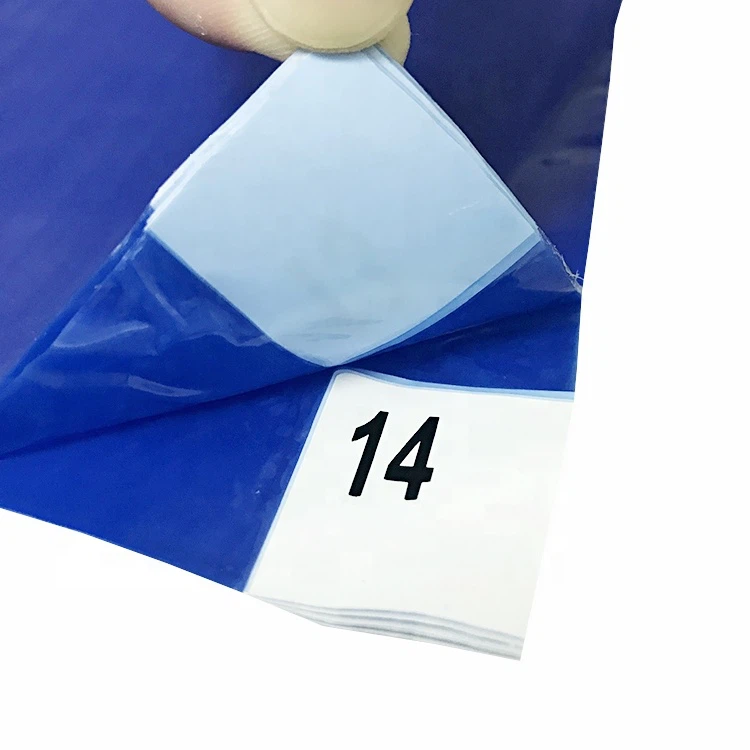
Locate the Numbered Tab: Find the corner tab (usually numbered 1-30). This ensures you are only lifting one layer at a time, extending the life of your Contamination Control Tacky Mat.
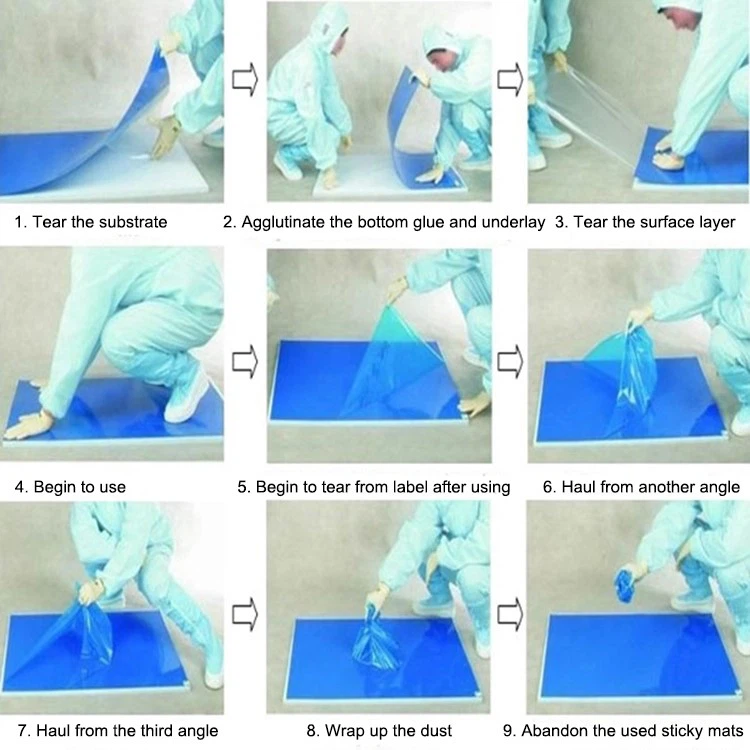
The Slow Lift: Slowly peel the corner and begin pulling the sheet toward the center of the mat.
The "Inward Fold": As you peel, fold the dirty side inward onto itself. This "traps" the dust, hair, and skin cells inside the adhesive sandwich, preventing them from becoming airborne.
The Final Ball: Continue the slow, inward-rolling motion until the entire sheet is removed. It should look like a small, sticky ball with all the contaminants safely sealed inside.
Immediate Disposal: Place the used sheet directly into a designated waste bin. Do not walk around the cleanroom holding the dirty sheet.
Monitoring and Maintenance
To keep your environment within ISO specifications, a "set it and forget it" mentality won't work.
Frequency of Change: In high-traffic zones, mats should be peeled at least once per shift. If the mat looks visually saturated or "grey," it has already lost its effectiveness and is likely transferring dirt rather than catching it.
Cart Traffic Logistics: If you use heavy equipment, ensure the wheels are fully rotated on the mat. One "walk-over" is rarely enough to remove 99% of particulates; two to three steps per foot is the industry gold standard.
Storage Savvy: Always store your replacement mats flat. Vertical storage can cause the adhesive to "slump" towards one side, leading to uneven tackiness when deployed.